
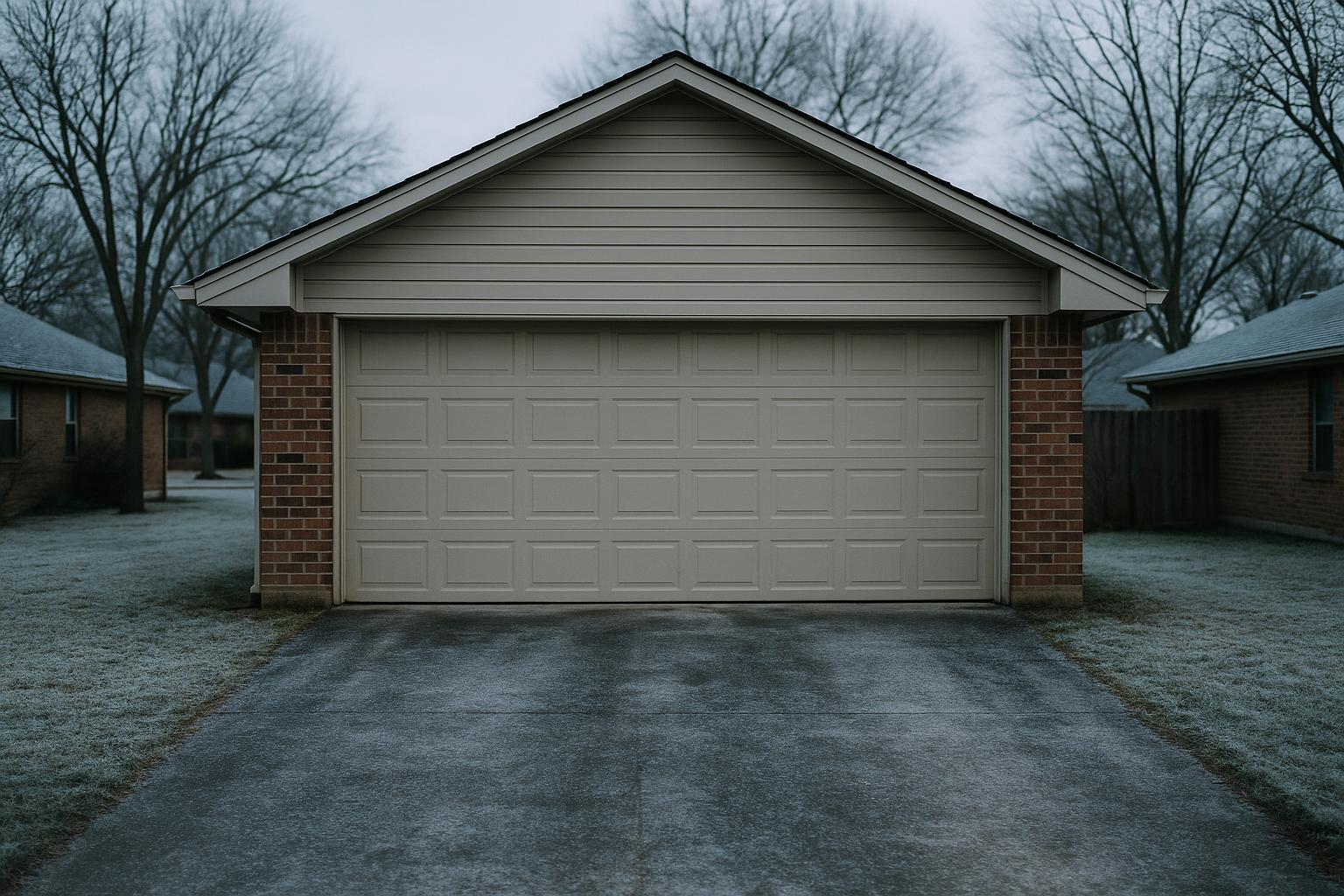
Why Cold Weather and Garage Doors Don't Always Get Along
You're running late on a freezing Rowlett morning, you hit the garage door opener button, and nothing happens. Or maybe the door groans, lifts a few inches, and then stops. Cold weather garage door problems are more common than most homeowners realize, and they tend to strike at the worst possible time.
While North Texas doesn't see the extreme winters that some parts of the country deal with, temperatures regularly dip below freezing between December and February. That's more than enough to cause issues with your garage door's mechanical components, lubrication, and even the door itself. The good news is that most cold weather garage door problems are preventable, and many can be resolved without a major repair.
Common Reasons Your Garage Door Won't Open in Cold Weather
Several things can go wrong with your garage door when temperatures drop. Here are the most frequent culprits we see when Rowlett homeowners call us during the winter months.
1. The Weatherstripping Is Frozen to the Ground
The rubber weatherstrip along the bottom of your garage door is designed to seal out rain, wind, and debris. But when moisture collects underneath it and temperatures drop below freezing overnight, that seal can literally freeze to the concrete floor of your garage or driveway.
When you try to open the door, the opener strains against the frozen seal. In some cases, the door won't budge at all. In others, the weatherstripping tears away from the bottom of the door, leaving you with a damaged seal and a gap that lets cold air and pests inside.
What to do: Never force the door open. Instead, try these steps:
- Use a heat gun or hair dryer to gently warm the area where the weatherstrip meets the ground.
- Pour warm (not boiling) water along the base of the door to melt the ice.
- Once the door is free, dry the area thoroughly and apply a silicone-based lubricant to the weatherstrip to help prevent it from freezing again.
2. Thickened or Hardened Lubricant
Your garage door relies on lubrication to move smoothly along its tracks, and the springs, rollers, and hinges all need to stay properly greased. Standard lubricants can thicken or harden in cold temperatures, creating extra friction and resistance. This makes the door feel heavy and sluggish, and it puts additional strain on your garage door opener.
What to do: Switch to a lithium-based or silicone-based garage door lubricant, which performs much better in cold weather than standard grease. Apply it to the springs, hinges, rollers, and tracks. If you're not sure what type of lubricant to use, a quick maintenance visit from a professional can take care of it.
3. Contracted Metal Components
Metal contracts when it gets cold. This is basic physics, but it has real consequences for your garage door. The springs, tracks, and other metal parts shrink slightly in freezing temperatures, which can throw off the door's balance and alignment. Springs that were already near the end of their lifespan may lose tension or even snap in the cold.
What to do: If your door seems harder to lift than usual or appears uneven, don't try to adjust the springs yourself. Garage door springs are under extreme tension and can cause serious injury. Call a professional to inspect the system and make any necessary adjustments.
4. Opener Sensitivity Issues
Most modern garage door openers have force settings that determine how much resistance the motor will push through before stopping. In cold weather, the added friction from thickened lubricant and contracted parts can exceed the opener's force threshold, causing it to stop or reverse as if something is blocking the door.
What to do: You can adjust the force settings on most openers by turning small screws or dials on the motor unit. Your owner's manual will show you where these are. Make small adjustments and test the door after each one. If you're uncomfortable doing this or the problem persists, it's best to have a technician take a look.
5. Misaligned or Blocked Safety Sensors
The photo-eye sensors near the bottom of your garage door tracks can be affected by cold weather too. Frost, condensation, or ice can form on the sensor lenses, blocking the infrared beam and preventing the door from closing. In some cases, the cold can cause the sensor brackets to shift slightly, throwing off the alignment.
What to do: Wipe the sensor lenses with a clean, dry cloth. Check that both sensors are aligned and that their indicator lights are steady. If the lights are blinking, the sensors may need to be repositioned.
How to Prevent Cold Weather Garage Door Problems
The best way to deal with winter garage door issues is to prevent them before the first freeze hits. Here's a simple checklist that can save you a lot of frustration:
- Schedule a fall maintenance visit. Having your garage door professionally inspected and tuned up before winter ensures everything is lubricated, balanced, and adjusted for the colder months ahead.
- Apply silicone-based lubricant. Replace any standard grease with a cold-weather lubricant on all moving parts.
- Inspect the weatherstripping. Replace cracked or worn weatherstripping before it has a chance to freeze and tear. A fresh seal also improves your garage's energy efficiency.
- Keep the area around the door dry. Make sure water isn't pooling at the base of your garage door. Improve drainage if needed, and clear any snow or ice buildup promptly.
- Test the door regularly. Open and close your garage door at least once a day during cold stretches, even if you don't need to use it. This prevents the weatherstrip from freezing in place and keeps the lubricant from settling.
When to Call a Professional
Some cold weather garage door problems are easy to handle on your own. Wiping down sensors, applying lubricant, and melting a frozen weatherstrip are all reasonable DIY tasks. But there are situations where calling a professional is the smarter and safer choice:
- The door is visibly off-track or crooked.
- You hear loud popping or snapping sounds, which may indicate a broken spring.
- The opener motor runs but the door doesn't move.
- You've tried basic troubleshooting and the door still won't open or close properly.
- The door feels significantly heavier than normal when you try to lift it manually.
Attempting to repair springs, cables, or tracks without the right tools and training can lead to injury or further damage to the door system.
Stay Ahead of Winter Weather in Rowlett
Cold snaps in Rowlett may not last as long as they do up north, but they can still catch homeowners off guard. A garage door that won't open on a freezing morning is more than an inconvenience — it can throw off your entire day and leave your home less secure.
At Rowlett Garage Door, we help homeowners across Rowlett, Rockwall, Sachse, and the surrounding communities keep their garage doors running reliably through every season. Whether you need a winter tune-up, a weatherstrip replacement, or emergency repair on a door that's stuck, we're here to help. Give us a call and let's make sure your garage door is ready for whatever the weather brings.