
Your Garage Door Springs Are Trying to Tell You Something
If you've ever had a garage door spring snap, you know it's not subtle. The loud bang, the door that suddenly won't budge, the panic of realizing your car is trapped inside — it's one of the most common and most disruptive garage door failures homeowners in Rowlett deal with.
But here's the thing: garage door springs almost never break without warning. There are signs — sometimes weeks or even months in advance — that your springs are wearing out and heading toward failure. If you know what to look for, you can replace them on your schedule instead of dealing with an emergency.
What Do Garage Door Springs Actually Do?
Before we get into the warning signs, it helps to understand why springs matter so much. Your garage door is heavy — most residential doors weigh between 130 and 350 pounds. The springs are what counterbalance all that weight, making it possible for your opener (or your arms) to lift the door with minimal effort.
There are two main types of garage door springs:
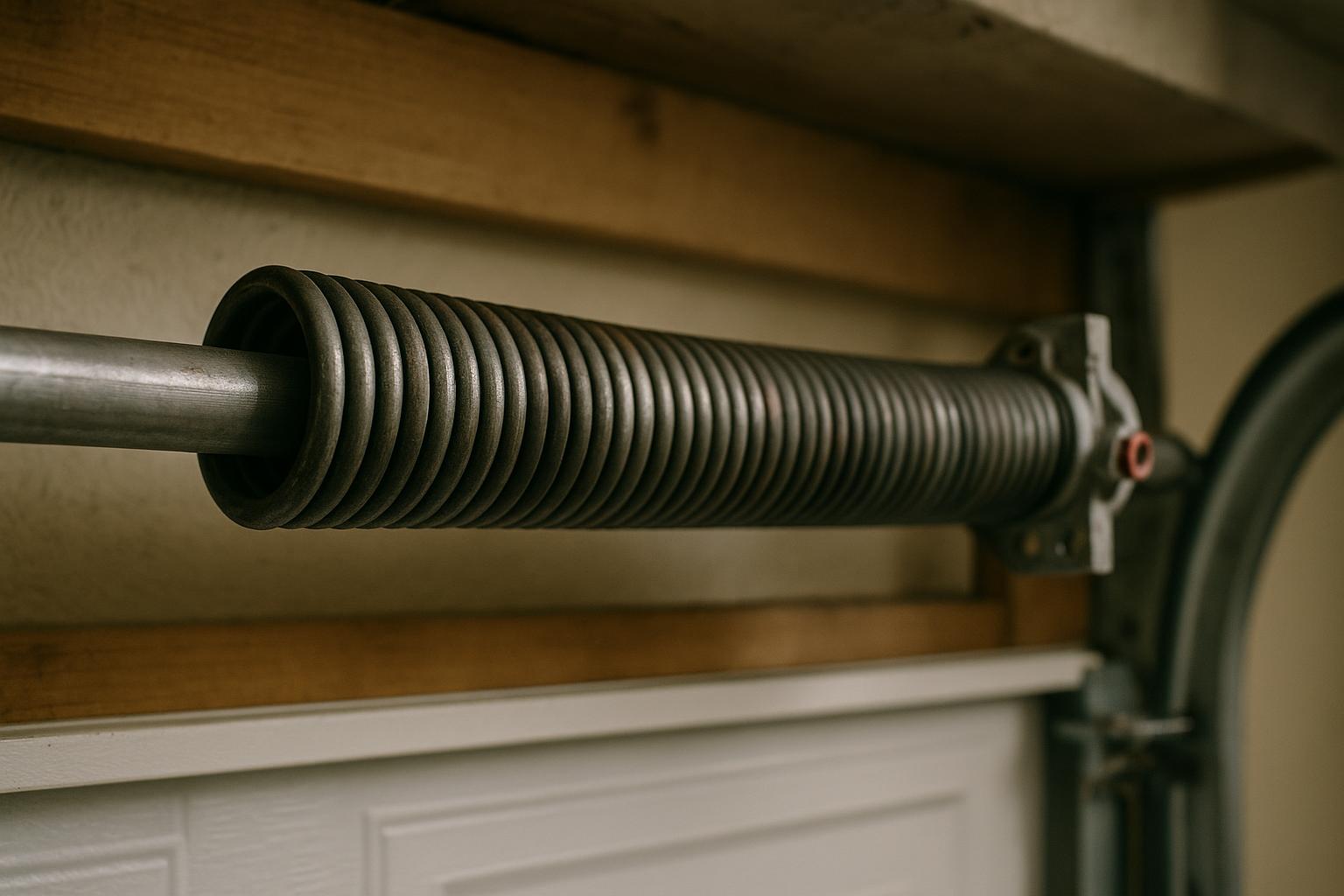
- Torsion springs — mounted on a metal shaft above the door opening. These are the most common type in modern garage doors.
- Extension springs — mounted along the horizontal tracks on either side of the door. These are more common in older installations.
Both types are under extreme tension, and both have a limited lifespan. Most standard torsion springs are rated for about 10,000 cycles — one cycle being one full open and close. For an average household that opens the garage door four times a day, that works out to roughly seven to nine years.
7 Warning Signs Your Springs Are Failing
1. The Door Feels Heavier Than Usual
Try this simple test: disconnect your garage door opener by pulling the emergency release handle, then manually lift the door about halfway. A properly balanced door should stay in place on its own. If it feels noticeably heavy, slides back down, or requires real effort to lift, your springs are losing tension and can no longer support the door's weight properly.
2. The Door Opens Unevenly or Crooked
If your garage door tilts to one side as it opens or closes, one spring may be weaker than the other. This is especially common in two-spring setups where one spring wears out faster. An uneven door puts extra stress on your tracks, cables, and opener, which can lead to additional damage if you ignore it.
3. You Hear Squealing, Grinding, or Popping Sounds
Some noise during operation is normal, but new or worsening sounds are a red flag. Squealing or grinding often means the spring coils are rubbing against each other due to wear. A loud popping or snapping sound during operation could mean a coil has already started to separate.
4. There's a Visible Gap in the Spring
This one is easy to spot if you know where to look. Check the torsion spring above your garage door. A healthy spring has tightly wound coils with no gaps. If you see a visible space or separation between the coils — even a small one — the spring has already partially failed and could snap at any time.
5. The Door Slams Shut Instead of Closing Smoothly
When springs are in good condition, they control the speed of the door as it closes. If your door drops the last foot or two instead of lowering gently, the springs aren't providing enough resistance anymore. This is both a safety hazard and a sign that complete failure is close.
6. Your Opener Is Struggling
Garage door openers are designed to do relatively light work because the springs handle most of the heavy lifting. If your opener is straining, running louder than usual, or stopping mid-cycle, it may be compensating for weak springs. Continuing to run the opener under these conditions can burn out the motor prematurely.
7. The Springs Look Rusty or Corroded
Rust weakens the metal and increases friction between the coils, which accelerates wear. If your springs show significant rust or corrosion, their remaining lifespan is shorter than you might expect. Homeowners here in Rowlett may notice this more during humid stretches in the spring and summer months when moisture can build up in the garage.
Can You Replace Garage Door Springs Yourself?
We get this question a lot, and the honest answer is: you shouldn't. Garage door springs are under an enormous amount of tension. A torsion spring that releases unexpectedly can cause serious injury or even death. Every year, thousands of people across the country are injured attempting DIY spring repairs.
Professional technicians have the tools, training, and experience to replace springs safely. They'll also ensure the new springs are properly sized and calibrated for your specific door, which is critical for smooth, balanced operation.
Should You Replace One Spring or Both?
If your door has two torsion springs and one breaks, we strongly recommend replacing both at the same time. Here's why:
- Both springs are the same age and have the same number of cycles on them. If one has failed, the other is close behind.
- Replacing both at once saves you a second service call (and a second disruption) in the near future.
- New springs on both sides ensure the door stays balanced, which protects your opener and other hardware.
The cost difference between replacing one spring and two is usually modest compared to the labor involved in a separate service visit later.
How to Extend the Life of Your Springs
While springs will eventually wear out no matter what, you can slow the process and get more years out of them with a few simple habits:
- Lubricate the springs — Apply a silicone-based or white lithium garage door lubricant to the springs two to three times a year. This reduces friction and helps prevent rust.
- Keep the door balanced — Perform the manual balance test described above every few months. If the door is off-balance, call a technician before the problem gets worse.
- Reduce unnecessary cycles — Every open and close counts toward the spring's lifespan. If you're in the habit of using the garage door as your primary entrance multiple times a day, consider using the front door occasionally.
- Schedule annual maintenance — A professional tune-up includes spring inspection, lubrication, balance testing, and hardware tightening. It's the single best thing you can do to prevent unexpected failures.
Don't Wait for the Snap
A broken garage door spring is more than an inconvenience — it can leave you locked out of your garage, damage your opener, or create a safety hazard for your family. If you've noticed any of the warning signs above, the smart move is to address it now rather than waiting for a complete failure.
At Rowlett Garage Door, we provide fast, professional spring replacement for homeowners across Rowlett, Rockwall, Garland, Sachse, Wylie, and Murphy. We carry a wide range of spring sizes on our trucks so most repairs can be completed in a single visit. If your garage door isn't acting right, give us a call — we'll diagnose the problem and get your door back in safe, reliable working order.