
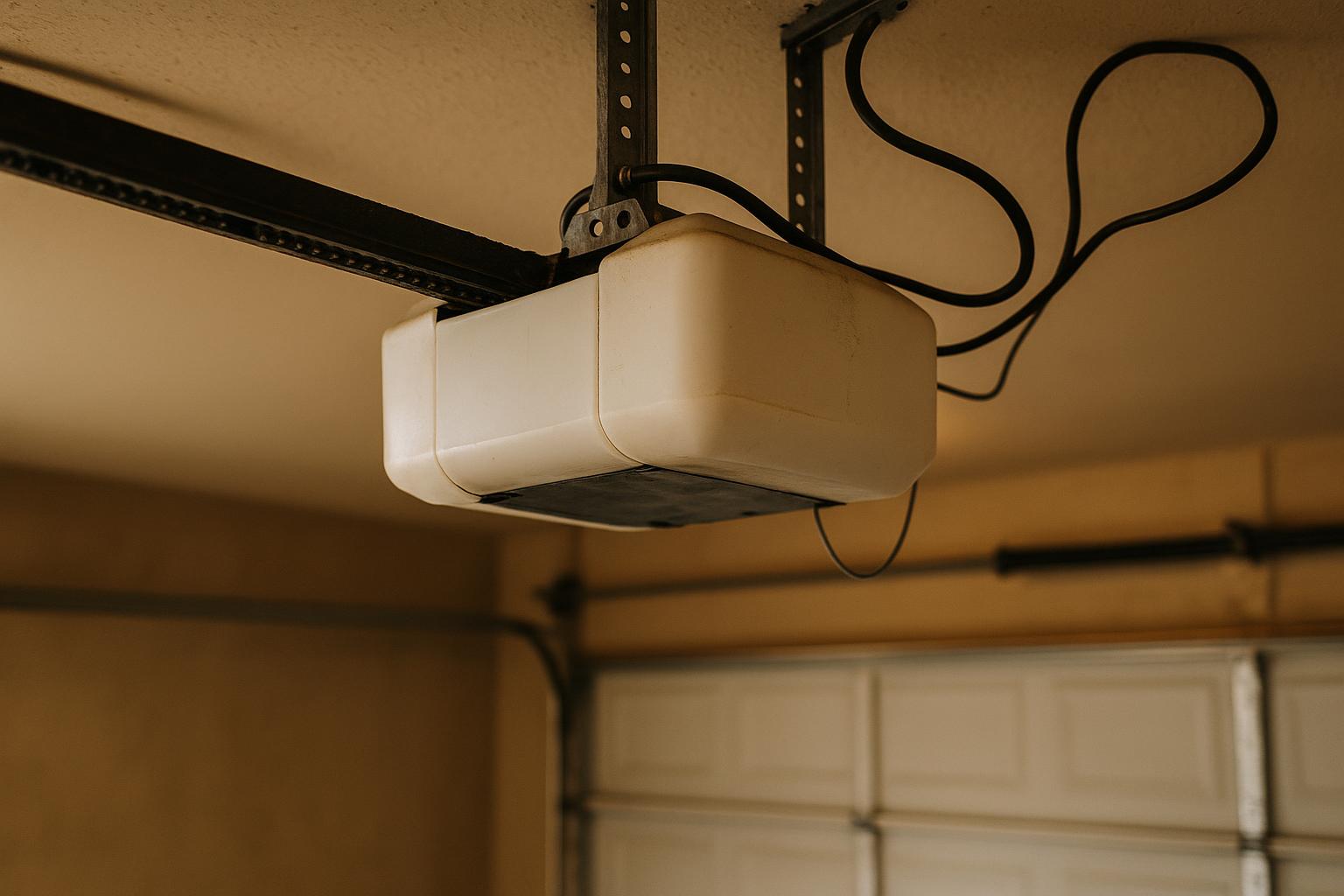
Your Garage Door Opener Won't Last Forever
Your garage door opener is one of those things you use multiple times a day without thinking about it. You press a button, the door goes up. You press it again, the door comes down. It's so routine that most homeowners in Rowlett don't give their opener a second thought — until the day it stops working entirely.
The good news is that garage door openers rarely fail without warning. They almost always show signs of wear before they give out completely. If you know what to look for, you can plan a replacement on your schedule instead of dealing with an emergency when you're running late for work or stuck outside in a Texas thunderstorm.
How Long Do Garage Door Openers Typically Last?
Most garage door openers last between 10 and 15 years, depending on the brand, how often you use them, and how well they've been maintained. If your opener is approaching that age range and you're starting to notice issues, it's probably not a coincidence — the motor and internal components are simply wearing out.
That said, age alone doesn't mean your opener needs to be replaced. A well-maintained opener can sometimes push past 15 years, while a neglected one might start struggling after seven or eight. The key is paying attention to how it performs day to day.
Warning Signs Your Garage Door Opener Is Failing
1. The Opener Is Louder Than Usual
All garage door openers make some noise, but there's a difference between normal operating sounds and something that sounds like it's grinding, straining, or rattling apart. If your opener has gotten noticeably louder over the past few months, the motor or internal gears may be wearing down.
Chain-drive openers are naturally louder than belt-drive models, so keep that in mind. But if your opener is making sounds it didn't used to make — especially grinding, squealing, or vibrating — that's a red flag worth investigating.
2. The Door Moves Slowly or Hesitates
When a garage door opener is healthy, the door should move at a consistent speed from start to finish. If you've noticed the door hesitating at the start, moving slower than it used to, or jerking as it travels along the tracks, the opener motor may be struggling to handle the load.
Before assuming the opener is the problem, it's worth checking the tracks, rollers, and springs. A door that's hard to move because of a mechanical issue will put extra strain on the opener and can make it seem like the opener is failing when the real problem is elsewhere. A quick inspection from a professional can sort that out.
3. The Opener Works Intermittently
One of the most frustrating signs of a failing opener is when it works sometimes but not others. You press the remote and nothing happens. You press it again and the door opens fine. Or the wall button works but the remote doesn't — or vice versa.
Start by replacing the batteries in your remote. It sounds obvious, but dead batteries are the most common cause of intermittent remote issues. If fresh batteries don't solve the problem, the issue could be with the opener's logic board, the receiver, or the wiring. These components degrade over time, especially in garages that experience extreme heat — something we deal with regularly here in Rowlett during the summer months.
4. The Opener Runs But the Door Doesn't Move
If you hear the motor running but the door stays put, the internal gears inside the opener may have stripped. This is especially common in older openers with plastic gears. The motor spins, but there's nothing left to transfer that motion to the drive mechanism.
Stripped gears can sometimes be replaced without buying a whole new opener, but if the unit is already old and showing other symptoms, a full replacement is usually the smarter investment.
5. The Door Reverses for No Apparent Reason
We've covered door reversal issues related to sensors and close-limit settings in a previous post, but it's worth mentioning here too. If your opener's logic board is malfunctioning, it can send incorrect signals that cause the door to reverse randomly or behave unpredictably. When the reversal isn't caused by an obstruction or misaligned sensors, the opener's internal electronics may be to blame.
6. You Notice a Burning Smell
A burning smell coming from your garage door opener is never normal. It usually means the motor is overheating, which can happen when the opener is working harder than it should — either because of its own internal wear or because the door is putting too much resistance on the system. If you smell something burning, stop using the opener immediately and have it inspected.
Should You Repair or Replace a Failing Opener?
This depends on the age of the unit and the nature of the problem. Here are some general guidelines:
- Replace the remote or batteries — If the remote is the only issue, this is a cheap and easy fix.
- Replace the gear kit — If the gears are stripped but the motor and electronics are fine, a gear replacement can extend the life of a newer opener.
- Replace the logic board — Circuit board replacements are possible but can be expensive enough that a new opener starts to make more financial sense, especially on older units.
- Replace the entire opener — If your opener is over 10 years old and experiencing multiple issues, a new unit is almost always the better call. Modern openers are quieter, more energy-efficient, and come with safety and smart-home features that older models simply don't have.
Benefits of Upgrading to a New Garage Door Opener
If you do decide it's time for a replacement, you might be surprised at how much garage door opener technology has improved. Here's what a new opener can offer:
- Battery backup — Newer openers can run during a power outage, so you're never locked in or out.
- Wi-Fi connectivity — Open and close your garage door from your phone, and get alerts when the door is left open.
- Quieter operation — Belt-drive and direct-drive openers are significantly quieter than older chain-drive models.
- Improved safety features — Modern openers meet current safety standards, including auto-reverse sensors and rolling code technology that prevents remote signal theft.
When to Call a Professional
Some opener issues — like replacing batteries or reprogramming a remote — are simple DIY tasks. But anything involving the motor, wiring, gears, or logic board should be handled by a trained technician. Garage door systems are under significant tension, and working on them without the right knowledge and tools can be dangerous.
If your garage door opener is showing any of the warning signs above, don't wait for a complete failure. At Rowlett Garage Door, we help homeowners across Rowlett, Rockwall, Sachse, and the surrounding area diagnose opener problems quickly and recommend the most cost-effective solution — whether that's a targeted repair or a full replacement. Give us a call and we'll get your garage door working reliably again.